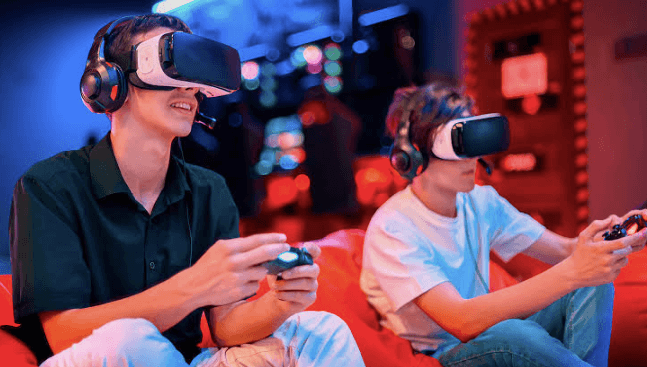
VR turns game spaces into tangible domains, where presence makes borders blur and time feel malleable. Motion tracking translates intent into natural motion, while haptics hint at weight and texture. Players move, reach, and explore with a self-directed ease that reshapes exploration. Social play emerges in shared rooms and fluid matchmaking, weaving cooperation and rivalry into instant rituals. Yet the balance of comfort, accessibility, and content leaves questions open, inviting further scrutiny of what truly sustains immersion.
What VR Adds to Immersion in Gaming
VR awakens a sense of presence by placing players inside the game world rather than observing it from the outside. In this realm, immersive visuals sculpt environments into living spaces, while motion and perspective become intuitive companions. Haptic feedback pulses through controllers, registering weight, texture, and impact. Freedom-focused narratives unfold with tactile certainty, transforming exploration into an embodied, self-directed journey.
How VR Changes Control and Interaction
As players step from the heightened sense of presence created by immersive worlds, control schemes and interaction models pivot toward embodied agency.
In VR, motion tracking translates intent into precise action, while natural gestures become tangible decisions.
Haptic feedback reinforces perceived weight and texture, deepening immersion.
Interfaces dissolve into instinct, enabling freer exploration and a more intimate dialogue between player and virtual environment.
VR’s Impact on Social Play and Competition
The social fabric of gaming in virtual reality intertwines presence with immediacy, turning shared spaces into canvases for collaboration, competition, and spontaneous storytelling.
VR’s impact on social play unfolds through VR hardware and fluid social matchmaking, shaping momentary alliances and rivalries.
Competitive rankings, crossplay dynamics, and emergent rituals redefine agency, inviting players to choreograph bold, unbounded experiences within collective virtual arenas.
Evaluating VR Experiences: Comfort, Accessibility, and Content
Green paths unfold as players step into virtual spaces, where comfort, accessibility, and content determine not only endurance but the quality of immersion.
The evaluation balances comfort metrics with user agency, charting how motion, fit, and fatigue influence continuation.
It also delineates accessibility barriers, urging designers to broaden exploration while preserving narrative depth and a sense of unbound freedom.
Frequently Asked Questions
What Are the Ongoing Health Risks of Long VR Sessions?
The ongoing health risks of long VR sessions include fatigue and VR motion sickness, with potential eye strain and posture concerns; over time, long term health risks may emerge, prompting mindful breaks and balanced habits for freedom-loving users.
How Does VR Affect Spatial Audio and Environmental Awareness?
VR alters perception by weaving VR audio into the scene, shaping spatial mapping and environmental awareness as sounds anchor objects and distances, guiding exploration, cautioning about unseen barriers, and inviting players to navigate immersive spaces with measured, instinctive freedom.
Can VR Be Effectively Used for Non-Gaming Entertainment?
VR can be effectively used for non-gaming entertainment, offering VR social experiences that connect communities and immersive filmmaking that invites viewers inside stories, transforming passive watching into exploratory engagement, where freedom-loving audiences encounter expressive, boundary-pushing cinematic environments.
What Are the Costs and Accessibility Barriers for Families?
The costs and accessibility barriers for families are stark, yet ironically inviting: shiny headsets gleam while hidden fees loom. Cost barriers and setup costs constrain purchase, as content deserts and device requirements whisper a hopeful, restrictive promise of freedom.
See also: How Virtual Networks Improve Flexibility
How Do Developers Monetize Limited VR Content Libraries?
Developers monetize limited vr content libraries through monetization strategies such as episodic releases and bundled access, while highlighting accessibility barriers costs; long sessions health concerns, spatial audio awareness, and non gaming entertainment shape user experiences and freedom-driven expectations.
Conclusion
In the hushed afterglow of play, virtual reality folds the world into a single, breath-held moment where every movement feels earned and real. The headset becomes a doorway, not a cage, guiding players through landscapes that respond with uncanny immediacy. Like a compass carved from wind, immersion points true north, weaving control, social spark, and comfort into a cohesive pilgrimage. The result is a theater where imagination moves as freely as feet, and presence lingers long after the session ends.
